Your first burn can be a bit of a fever dream.
We’ve Saved You a Patch of Dirt.
A few of you have been asking over on Discord for advice for your first Burn, so consider this a little welcome package from those of us who have been there before. Think of it as a hand to hold while you read the Survival Guide.
Maybe you’re a seasoned festival goer. Or the last time you slept outdoors was a disastrous school camp in the 2000s. Perhaps you’ve spent three weeks researching Kiwiburn and have reached the stage where you’re no longer sure what a normal amount of tent pegs is.
… you’re among friends.
Whatever brought you here, welcome! We’re glad you’re coming.
Kiwiburn can be a strange thing to explain to someone who hasn’t been.
It’s a temporary city built by the people who inhabit it. Sort of a social experiment full of art, music, performances, workshops, curious little corners and people who have gone to extraordinary lengths to make something happen.
There isn’t a conventional festival lineup waiting for you, with a handful of performers and everyone else watching. The experience is made by the people who turn up.
That includes you.
And if you’re currently wondering what on earth you’re supposed to do for several days in a paddock in Hunterville, don’t worry. You don’t need to arrive with a master plan.
You just need to get here.
Here’s how to find your feet, discover what’s out there, and what to expect on arrival:
First, getting there
Before you set off, check the official Kiwiburn Survival Guide and What to Bring list.
Seriously. Read them.
Your future self, shivering in a paddock, will thank whatever deity possessed your past self to pack properly.
Kiwiburn is not a festival where you can nip to a shop when you’ve forgotten something essential. You need to bring your own food, camping gear, clothing, toiletries and everything else you need to look after yourself for the duration.
A few things worth checking twice before you leave:
- Your ticket and photo ID. Have them ready for the Gate.
- Food and drinking water containers. Drinking water is available on site, but you’ll need something to carry it in. A cup or other vessel. Bring enough food and drink for yourself, too.
- Shelter for sun, wind and rain. Central North Island weather likes to keep things interesting. It doesn’t always agree that it’s summer. Secure your tent and shade structure properly. Test these before getting to the site if they’re new pieces of equipment.
Last burn was very wet. Always plan for rainy days, shoes you can slip easily on and off and make sure your structure could potentially survive four days of solid rain. - Warm clothes and waterproof layers. Even if the days are roasting, evenings can get cold.
- Lighting and earplugs. You’ll need to see where you’re walking after dark, and the Paddock doesn’t promise to go quiet when you go to bed.
- Rubbish bags. There are no public rubbish bins. Whatever you bring in, you need to take back out. Burners are big on leave no trace, employ the tidy kiwi mindset.
The full official list has more detail, including equipment, camping and prohibited items. If you have a doubt, check out the survival guide.
The hill driving down to the Kiwiburn site can also be quite steep and it’s on a graded gravel type surface. There’s strictly no walking down for the safety of everyone. People can help you out if you get stuck but always good to have a think about if the barely legal road tyres are a miss for the festival. Our granny sedan did make it for context but when it’s wet you need to take a running start to get back up and don’t stop.
You’ve arrived. Now what?
- You’ll pass through Gate, where volunteers check you in, before heading to Greeters for the traditional Kiwiburn welcome. You’ve made it. The car smells weird, your back hurts, you took longer than you expected to get here. But you’re here. The drive is over.
- The traditional Kiwiburn welcome is multiple choice. There are options for you. I won’t spoil the surprise but know that you are in control to how you want to be welcomed home.
- Next, find your campsite and get set up. If you’re part of a Theme Camp, head to your allocated spot. If you’re camping independently, use the map to find the designated General Camping areas. You have freedom of choice, just be kind to your neighbours and try to help each other out.
Once you’re settled, move your car to the Parking Paddock as directed. - Get your tent sorted. Put your water somewhere accessible. Make sure you can find your camp again after dark. Mark your ropes and stakes so nobody trips over them, and secure everything properly against the wind. Would highly recommend some sort of light for lighting up the dark tent.
- Then take a breath.
- You don’t need to immediately find the biggest party or have the most extraordinary experience of your life. You’ve made it. Get comfortable, have something to eat and drink, and give yourself a moment.
- When you’re ready, go for a walk.
The best way to find out what happens here
- My top pick: Circle the First Time Burner Orientation workshop in your Event Guide and make sure it’s the first event you go to. You get to meet other ‘Birgins’, and get up to speed with some really good advice from veterans on where everything is, and how to get started.
- Walk around. Look at the art. See what the Theme Camps are up to. Talk to people. Check the Event Guide and follow your curiosity.
- Kiwiburn is participatory, which means the experiences aren’t all organised entertainment delivered to an audience. People create events, build artworks, run workshops, host activities and invite others into the things they’ve made. You and your mates could walk into Kiwiburn and have completely different experiences of the same festival.
And if you’re wondering whether you’re allowed to walk into a Theme Camp, you can generally go in and see what’s happening.
They’re social spaces designed for people to interact. Be respectful of the people and spaces you encounter, and if you’re unsure whether something is open to visitors, just ask.
What if I don’t know anyone?
A few small things can make meeting people easier:
- Learn the names of the people camping near you.
- If something interests you, ask about it.
- Accept invitations when you genuinely want to, and say no when you don’t.
- Remember that a friendly conversation doesn’t have to become a lifelong friendship to be worthwhile.
- Or if you feel like you want an extra friend before the Burn check out Adopt A Burner.
Kiwiburn has a strong culture of consent. Ask before touching someone, taking their photograph, or assuming they’re keen to participate in something. A friendly atmosphere doesn’t mean everybody wants the same things.
Learn about and practise safe bystander intervention.
Know who is around that you can call on for support;
On site support includes Consent Club, Black Sheep Rangers and Site Mangers.
Find your landmarks
- The Paddock can feel like a lot to take in at first. Here are a few places worth knowing about.
- The Depot is the community information centre. It’s a good place to check the map, find out what’s happening, ask questions, enquire about volunteering or look for lost valuables. It’s also where you can buy ice during its advertised opening hours.
- The ARTery is the art hub. Head there to find out about art tours and grants, and use the art map to discover what’s scattered around the site.
- Theme Camps are places to meet people and explore experiences created by participants. Some might offer workshops, others music or activities, and others simply somewhere to hang out.
- Black Sheep Rangers are volunteers who roam the Paddock in orange vests. If you need help, have a concern or aren’t sure where to turn, you can approach them.
- Sanctuary is there for people who are feeling overwhelmed, intoxicated or otherwise out of sorts, and need support or somewhere safer to regroup. If you need medical assistance, find the Medics.
You don’t have to memorise every location before you arrive. Get familiar with the site map, learn where support is available, and ask questions when you need to.
I sometimes used Theme camps as my landmarks as where my tent was. Or as directions for people, ‘If you just go past the sewers and to the right you’ll find what you’re looking for’ is an actual direction I used last year…
Look after yourself while you’re having the time of your life
- It’s easy to get swept up in everything that’s happening. You might want to stay out all night, attend every workshop and follow every interesting sound into the distance.
- By all means, enjoy yourself. Just remember that you’re also a human body.
Drink water. Eat actual meals. Reapply sunscreen. Rest when you need to. Bring warm clothes for the evening and dry layers for wet weather. If you’re exhausted, go to bed. There is no prize for making yourself miserable in pursuit of a perfect Burn. - Be sensible around the river, too. If you swim, take a buddy, stay sober and don’t swim at night. Conditions can change, and river access may be closed if it’s unsafe.
- And if things aren’t going well, you don’t have to tough it out alone. Ask a Ranger or another volunteer for help, or head to Sanctuary if you need support.
Two nights you won’t forget
The Effigy Burn takes place on Saturday night. It’s a major communal moment, as the artwork representing the year’s theme is set alight. Follow the instructions of the fire crew and respect the safety perimeter. Once the perimeter comes down, it’s customary for people to run around the fire. Clothing is optional.
The Temple Burn takes place on Sunday night. The Temple is a space for reflection, grief and remembrance. People may leave messages on its walls, and those messages burn with it. The Temple Burn is silent: no music, no talking. Respect the quiet and the people who have come to be there.
You don’t need to know in advance how either of these moments will feel. Just arrive with an open mind, and give other people room to experience them in their own way.
A few things that make a difference
There are some practical details that are easy to overlook when you’re busy imagining all the wonderful things you’re going to do.
- There is no shopping at Kiwiburn. Nothing is sold on site except ice. Bring what you need, and remember that gifting is not bartering.
- Leave No Trace means everything. There are no public bins. Take your rubbish home, keep your campsite tidy and pick up Matter Out Of Place (MOOP) when you see it.
- Photography requires consent. Ask before taking photographs of people, and check the current photography policy if you intend to publish images.
- Stay within the event boundaries. The Paddock is on private land, and neighbouring properties aren’t part of the event.
- Check the current information before you go. Event details, safety conditions and practical arrangements can change from year to year.
For the full details, the Kiwiburn Survival Guide is your essential companion. This article is here to help you imagine the experience and find your feet; the official guide is where to check the current requirements.
Welcome home
Be curious. Be considerate. Look after yourself and the people around you. Give yourself permission to try something new, and permission to sit something out.
You might arrive feeling nervous, out of place, or completely unsure what to expect. You might leave with new friends, strange stories, a favourite piece of art or you might simply leave feeling that you were part of something.
That’s the thing about Kiwiburn: everyone helps create the world they’re stepping into. You don’t have to arrive knowing how to do that. You can learn as you go.
We’re glad you’re coming.
Nau mai, hoki mai ki tō tātou kāinga.
Welcome home.
Written by Princess x
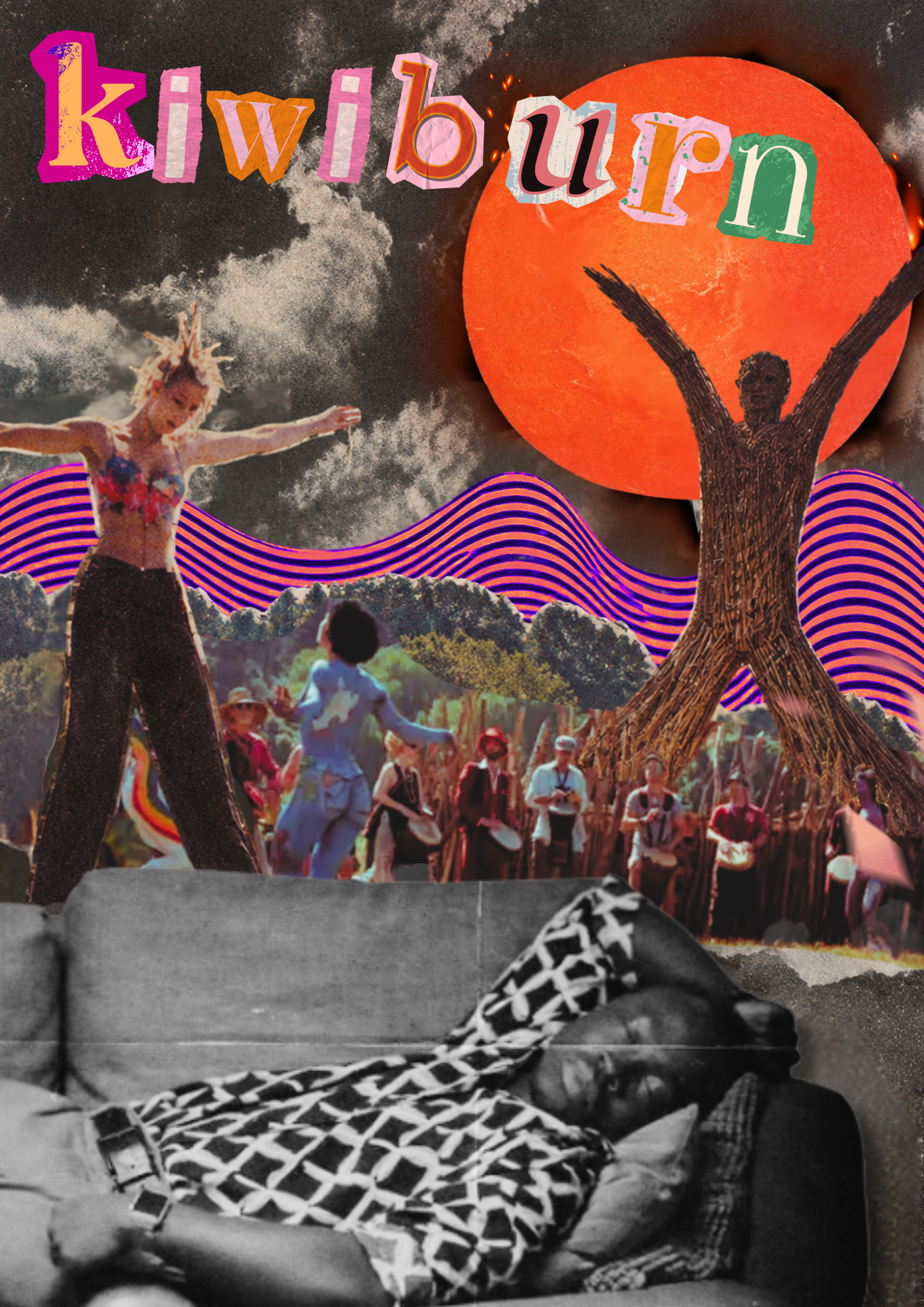
Digital Collage made with a lot of vintage filters on Canva.